

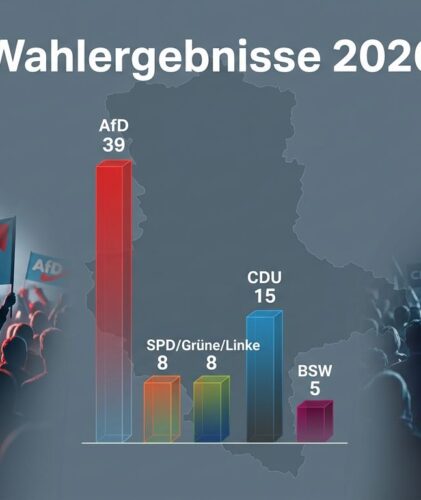
The Landtagswahl in Sachsen-Anhalt took place on 6 September 2026. According to the preliminary final result, the Wahlbeteiligung was 77.8 percent, well above the 60.3 percent recorded in 2021. The AfD clearly led the result, while the CDU followed at a much lower level.
Based on the Zweitstimmen, the AfD received 43.8 percent and the CDU 17.2 percent. The SPD reached 9.3 percent, the Grüne 8.9 percent, Die Linke 8.6 percent, the BSW 5.3 percent and the FDP 2.6 percent. The new Landtag has 83 seats: the AfD receives 39 mandates, the CDU 15, and the SPD, Grüne and Die Linke each receive 8. The BSW enters the Landtag with 5 seats, while the FDP receives none.
The following sections explain the Stimmenanteile, seat allocation and changes compared with the official 2021 result. They distinguish between votes and mandates rather than treating these figures as interchangeable.
Source: The Wahlportal des Landes Sachsen-Anhalt provides the official figures. Further video report: https://www.youtube.com/watch?v=4zi91ba808Q
Key Takeaways
- The AfD was the strongest party in the 2026 Saxony-Anhalt state election with 43.8% of the second votes and 39 of the 83 seats.
- The CDU fell sharply compared with 2021, dropping from 37.1% to 17.2% and from 40 seats to 15.
- The SPD, Greens and Die Linke each hold eight seats, while the BSW entered the Landtag for the first time with five seats. The FDP received 2.6% and won no regular mandate.
- Voter turnout rose from 60.3% in 2021 to 77.8% in 2026, an increase of 17.5 percentage points.
- The AfD is three seats short of the absolute majority of 42. The final government and any coalition therefore depend on political agreements, not on the election result alone.
Overview of the 2026 state election results in Saxony-Anhalt
The 2026 Landtagswahl in Sachsen-Anhalt is shown here using the vorläufiges Endergebnis. The table compares Zweitstimmen, Stimmenanteile, changes from 2021 and the resulting Sitzverteilung.
| Party | Zweitstimmen 2026 | Change from 2021 | Seats 2026 |
|---|---|---|---|
| AfD | 43.8% | +23.0 percentage points | 39 |
| CDU | 17.2% | -19.9 percentage points | 15 |
| SPD | 9.3% | +0.9 percentage points | 8 |
| Grüne | 8.9% | +3.0 percentage points | 8 |
| Die Linke | 8.6% | -2.4 percentage points | 8 |
| BSW | 5.3% | Not standing in 2021 | 5 |
| FDP | 2.6% | -3.8 percentage points | 0 |
The state-level figures are published in the amtlichen Ergebnisdienst Sachsen-Anhalt. The overview lists 83 seats in total.
The parties compared by vote share
The AfD leads clearly with 43.8%. Its margin over the CDU is 26.6 percentage points. This gap is larger than the entire vote share of every party except the AfD.
The CDU follows with 17.2%, 8.8 percentage points ahead of the SPD. The SPD reaches 9.3%, while the Grüne stand at 8.9%. Die Linke follows closely at 8.6%.
The BSW reaches 5.3% and therefore passes the Fünf-Prozent-Hürde. It receives five seats. The FDP gains 2.6%, which is insufficient for a regular seat in the new Landtag.

The party-list vote determines the proportional distribution of seats. Erststimmen, by contrast, decide the constituency winner. Direktmandate can therefore affect the final allocation alongside the proportional result.
Valid votes are ballots that can be clearly assigned to a party or candidate during counting. Percentages refer to these valid votes, not to every ballot submitted. Invalid ballots are therefore excluded from the party comparison.
The term other parties covers parties listed individually or collectively below the relevant threshold. For the allocation of seats, it matters which parties reach the threshold or meet the legal requirements through constituency results.
Although the FDP received party-list votes, its 2.6% share did not produce a regular seat under the official calculation.
Parties below five percent generally remain outside the regular allocation of list seats unless a legal exception applies. Their votes are not later converted directly into seats for the other parties. Instead, the seats are allocated among the parties that meet the applicable requirements.
The difference between a vote share and parliamentary representation is visible in the result for the AfD. It receives 39 of the 83 seats, rather than exactly 43.8% of the mandates. The calculation method, eligible parties and constituency results all influence the outcome. The CDU also receives 15 seats, not precisely 17.2% of the mandates.
Turnout and the significance of the result
Turnout reached 77.8% in 2026. In the 2021 state election, 60.3% of eligible voters participated. The increase was therefore 17.5 percentage points.
Percentage points show the direct difference between two percentages. Subtracting 60.3 from 77.8 gives 17.5. A relative increase would be a different calculation.
The higher turnout shows that more eligible voters cast a ballot in 2026. It does not prove that one particular party benefited from the increase. That would require absolute vote totals, the number of eligible voters and the changes affecting all parties to be considered together.
The publication stage also matters. On election night, authorities first publish incoming reports from individual polling districts. These figures can change until all results have been counted and transmitted. The Ergebnisdienst auf Landesebene shows the counting status and the current result stage.
The preliminary official final result is available once all polling districts have been counted and the figures provisionally consolidated. It is more reliable than projections or interim figures, but it remains formally preliminary. The official final result follows after review by the responsible election committees and final confirmation. Formal corrections may still occur without changing the political ranking.
For the seats, the official overview is therefore decisive, not an early election-night graphic. The published Sitzverteilung der Landtagswahl 2026 assigns 39 seats to the AfD and 15 to the CDU. The SPD, Grüne and Die Linke each receive eight seats, while the BSW receives five. Together, these figures make up 83 seats in the Landtag.
The comparison with 2021 remains informative despite the different size of the legislature. The Landtag then had 97 seats, compared with 83 in 2026. Seat totals from the two elections therefore cannot be compared in isolation. Changes in turnout and vote shares must be assessed alongside the size of the legislature and the applicable seat calculation.
So verteilt sich der neue Landtag auf die Parteien
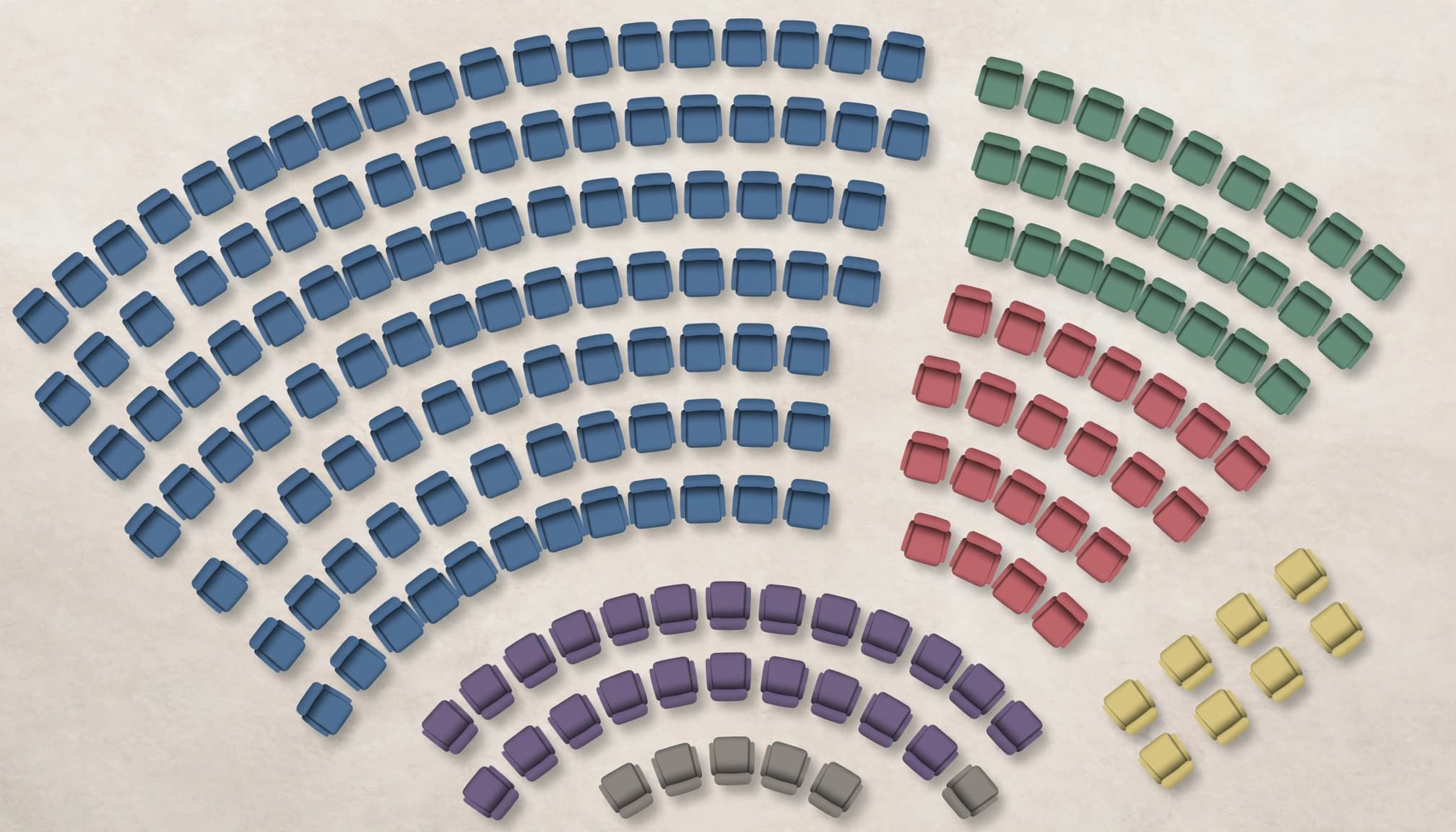
Der Landtag von Sachsen-Anhalt umfasst nach der Landtagswahl 2026 insgesamt 83 Sitze. Die amtliche Sitzverteilung folgt nicht einer einfachen Rundung der Prozentwerte. Entscheidend sind die gültigen Zweitstimmen, die Fünfprozenthürde und die gesetzlich festgelegte Gesamtzahl der Mandate.
| Partei | Sitze 2026 | Sitze 2021 | Veränderung |
|---|---|---|---|
| AfD | 39 | 23 | +16 |
| CDU | 15 | 40 | -25 |
| SPD | 8 | 9 | -1 |
| Grüne | 8 | 6 | +2 |
| Die Linke | 8 | 12 | -4 |
| BSW | 5 | nicht angetreten | neu |
| FDP | 0 | 7 | -7 |
| Gesamt | 83 | 97 | -14 |
Die vollständige Sitzverteilung für 2026 lautet damit: AfD 39, CDU 15, SPD 8, Grüne 8, Die Linke 8 und BSW 5. Die FDP erhält trotz 2,6 Prozent der Stimmen kein Mandat.
Warum 83 Sitze anders wirken als 97 Sitze im Jahr 2021
Der Landtag ist 2026 um 14 Sitze kleiner als 2021. Dadurch erhält jedes einzelne Mandat ein größeres rechnerisches Gewicht. Ein Sitz entsprach 2021 etwa 1,03 Prozent des Parlaments. Bei 83 Sitzen sind es rund 1,20 Prozent. Der Unterschied wirkt zunächst gering, verändert aber die Grenzen zwischen Fraktionen und Mehrheiten.
Die Sitzanteile lassen sich direkt berechnen. 39 von 83 Sitzen entsprechen rund 47,0 Prozent des Parlaments. 23 von 97 Sitzen, wie bei der AfD im Jahr 2021, entsprachen dagegen nur rund 23,7 Prozent. Der Zuwachs beträgt deshalb nicht nur 16 Mandate. Der Anteil am Parlament hat sich nahezu verdoppelt.
Auch bei kleineren Parteien wird der Effekt sichtbar. Acht Sitze entsprechen 2026 rund 9,6 Prozent des Parlaments. Neun Sitze im 97-köpfigen Parlament von 2021 entsprachen rund 9,3 Prozent. Eine Partei kann daher trotz eines ähnlichen Stimmenanteils eine leicht andere parlamentarische Stellung erhalten.
Die CDU zeigt den umgekehrten Fall besonders deutlich. Sie hatte 2021 insgesamt 40 Sitze. 2026 kommt sie auf 15 Mandate. Der Rückgang beträgt 25 Sitze. Ein Teil dieser Veränderung hängt mit dem starken Rückgang ihres Stimmenanteils zusammen. Zusätzlich verteilt sich das kleinere Parlament auf weniger Mandate. Der Sitzverlust lässt sich deshalb nicht allein durch Prozentpunkte erklären.
Für die AfD gilt dasselbe Prinzip in die andere Richtung. Sie gewinnt 2026 gegenüber 2021 insgesamt 16 Sitze. Der Stimmenzuwachs ist dafür der wichtigste Grund. Auch die veränderte Zahl der Sitze beeinflusst das Ergebnis. Bei 83 Mandaten kann derselbe Stimmenanteil anders auf ganze Sitze abgebildet werden als bei 97 Mandaten.
Die Berechnung erfolgt nach dem Hare/Niemeyer-Verfahren. Zunächst wird ermittelt, wie viele Sitze den teilnehmenden Parteien rechnerisch zustehen. Dafür wird der Stimmenanteil einer Partei mit der Zahl der zu vergebenden Sitze ins Verhältnis gesetzt. Die ganzzahligen Sitze werden zuerst vergeben. Danach entscheiden die größten verbleibenden Bruchteile über die offenen Mandate.
Ein vereinfachtes Beispiel macht den Unterschied sichtbar. Ergibt eine Berechnung für eine Partei 14,42 Sitze, erhält sie zunächst 14 Mandate. Ergibt eine andere Partei 7,71 Sitze, liegt ihr Bruchteil höher. Wenn nur noch ein Sitz zu vergeben ist, kann dieser deshalb an die zweite Partei fallen. Die Prozentwerte werden nicht beliebig auf- oder abgerundet. Die Nachkommastellen entscheiden über einzelne Mandate.
Ein Sitzgewinn lässt sich deshalb nicht direkt aus dem Abstand zwischen zwei Prozentwerten ablesen. Erst die Verteilung aller zugelassenen Stimmen auf die feststehende Zahl der Mandate ergibt das Ergebnis.
Die Fünf-Prozent-Hürde verändert außerdem die Grundlage der Rechnung. Parteien unter fünf Prozent nehmen an der regulären Sitzverteilung nicht teil, sofern keine gesetzliche Ausnahme greift. Ihre Stimmen werden nicht nachträglich in Mandate umgewandelt und auch nicht automatisch auf die übrigen Parteien verteilt.
2026 überschreitet das BSW mit 5,3 Prozent die Fünf-Prozent-Hürde und erhält fünf Sitze. Die FDP bleibt mit 2,6 Prozent darunter und erhält deshalb kein reguläres Mandat. Dadurch konkurrieren die zugelassenen Parteien um die 83 Sitze. Die Stimmen der FDP bleiben außerhalb dieser Berechnung.
Mehrheiten, Fraktionen und die neue parlamentarische Ausgangslage
Im neuen Landtag liegt die absolute Mehrheit bei 42 Sitzen. Diese Schwelle ergibt sich aus der Hälfte von 83 Sitzen plus einem Mandat. Die AfD ist mit 39 Sitzen stärkste Kraft. Sie verfehlt die absolute Mehrheit jedoch um drei Sitze.
Damit reicht keine Entscheidung aus, die nur von den AfD-Abgeordneten getragen wird. Unter den genannten Bedingungen wären mindestens drei weitere Stimmen erforderlich. Das setzt voraus, dass alle 83 Sitze besetzt sind und alle Abgeordneten an der Abstimmung teilnehmen. Diese rechnerische Möglichkeit sagt jedoch nichts über politische Zusammenarbeit aus.
Die CDU verfügt über 15 Sitze. Zusammen mit der AfD käme sie auf 54 Mandate. Auch eine Koalition aus AfD und SPD würde mit 47 Sitzen rechnerisch eine Mehrheit erreichen. Mit Grünen oder Die Linke käme die AfD ebenfalls auf 47 Sitze, mit einer weiteren Partei auf 44. Diese Zahlen beschreiben ausschließlich mathematische Kombinationen.
Ohne die AfD erreichen CDU, SPD, Grüne, Die Linke und BSW zusammen 44 Sitze. Auch diese Konstellation hätte rechnerisch mehr als die erforderlichen 42 Mandate. Ob daraus eine Regierung, eine Tolerierung oder eine andere Form der Regierungsbildung entstehen könnte, hängt von politischen Entscheidungen ab. Die Sitzverteilung begründet keine Koalition und trifft keine Aussage über tatsächliche Vereinbarungen.
Der Begriff Fraktion darf nicht mit der bloßen Zahl der Sitze einer Partei gleichgesetzt werden. Parteien können eine Fraktion bilden, wenn die gesetzlichen und parlamentarischen Voraussetzungen erfüllt sind. Erst eine solche Fraktionsbildung legt fest, wie Abgeordnete organisatorisch im Landtag auftreten. Für die Mehrheitsrechnung bleibt zunächst die Zahl der Mandate maßgeblich.
Eine parlamentarische Zusammenarbeit kann auch einzelne Abstimmungen betreffen. Eine Partei kann etwa einem Haushalt zustimmen, ohne einer Regierung anzugehören. Ebenso kann eine Minderheitsregierung für einzelne Vorhaben wechselnde Mehrheiten suchen. Welche Person später Ministerpräsident wird, lässt sich aus den Sitz Zahlen allein nicht bestimmen.
Die neue Ausgangslage ist deshalb durch zwei Zahlen geprägt: 39 Sitze für die AfD und 42 Sitze als Mehrheitsschwelle. Zwischen beiden Werten liegen drei Mandate. Gleichzeitig verfügen die übrigen Parteien zusammen über 44 Sitze. Der Landtag hat damit keine Partei mit eigener Mehrheit, aber mehrere rechnerische Wege zu einer Mehrheit. Entscheidend ist, welche Abgeordneten bei konkreten Entscheidungen gemeinsam stimmen.
What changed compared with the 2021 state election
The comparison of the Landtagswahl in Sachsen-Anhalt in 2021 and 2026 shows a major shift in political strength. The AfD more than doubled its Stimmenanteile, while the CDU declined sharply. At the same time, the Landtag shrank from 97 to 83 seats, affecting the comparison of mandates.
The official figures can only be assessed properly when vote percentages and seats are considered separately. A change in percentage points does not automatically produce the same change in mandates. Parliament size, the electoral threshold and the entry of new parties also matter.
The AfD gains strongly while the CDU declines
The AfD received 20.8 percent of the second votes in 2021 and 43.8 percent in 2026. That equals an increase of 23.0 percentage points. Its number of seats rose from 23 to 39, an increase of 16 seats.
The AfD therefore holds almost half of the 83-seat Landtag in 2026. Its share of seats is approximately 47.0 percent. In 2021, it held 23 of 97 seats, or around 23.7 percent. The comparison shows two changes: the AfD gained votes and now occupies a much larger share of a smaller parliament.
The CDU experienced the opposite development. Its vote share fell from 37.1 percent in 2021 to 17.2 percent in 2026. This represents a decline of 19.9 percentage points. The CDU lost 25 seats, falling from 40 to 15 mandates.
The scale of the shift is clear in a direct comparison. AfD and CDU were 16.3 percentage points apart in 2021. In 2026, the gap reached 26.6 percentage points. The seat balance changed from 23 to 40 mandates in favour of the CDU to 39 to 15 in favour of the AfD.
The figures describe the voting result but do not automatically explain voter motives. Statements about causes would require reliable evidence, such as a Wählerwanderung analysis. The official results only show how votes and seats changed.
The official seat allocation for 2026 assigns 39 mandates to the AfD and 15 to the CDU. Both parties therefore changed their vote shares and their parliamentary ranking compared with 2021.
SPD, Greens and Die Linke show smaller changes
The changes among the SPD, Greens and Die Linke are considerably smaller than those recorded by the two largest parties. Even so, a few percentage points can affect parliamentary strength when the number of available seats is limited.
The SPD increased from 8.4 percent in 2021 to 9.3 percent in 2026. That equals 0.9 percentage points more. At the same time, its number of seats fell from nine to eight. This apparent contradiction results from the smaller parliament and the changed group of parties participating in the allocation.
The Greens rose from 5.9 to 8.9 percent. Their number of seats increased from six to eight. Die Linke, by contrast, lost 2.4 percentage points, falling from 11.0 to 8.6 percent. Its representation declined from twelve to eight seats.
Die Linke illustrates how small percentage changes can affect individual mandates. The Fünf-Prozent-Hürde determines whether a party participates in the regular allocation of list seats. Fractions and the total number of mandates can then influence the final result.
The comparison therefore produces different outcomes for each party. The SPD gained votes but lost a seat, while the Greens increased their representation. Die Linke lost both votes and seats. These results reflect the interaction of all parties in the allocation process.
BSW and FDP change the party system
The BSW entered the Landtag for the first time in 2026 with 5.3 percent. The party exceeded the threshold by 0.3 percentage points and received five seats. There is no comparable 2021 figure because the BSW did not contest that election as an independent party.
Its first entry also changes the relative calculation of other parties‘ seat shares. The 83 mandates are distributed among more parties represented in parliament. As a result, parties with similar vote percentages may receive different numbers of seats than an isolated comparison would suggest.
The FDP lost its parliamentary representation. Its vote share fell from 6.4 percent in 2021 to 2.6 percent in 2026, a decline of 3.8 percentage points. Its number of seats fell from seven to zero.
The distance from the threshold was 2.4 percentage points in 2026. The FDP therefore did not participate in the regular allocation of the 83 mandates. Its votes were not subsequently redistributed as seats among the other parties.
| Party | Second votes 2021 | Second votes 2026 | Change | Seats 2021 | Seats 2026 | Change |
|---|---|---|---|---|---|---|
| AfD | 20.8% | 43.8% | +23.0 points | 23 | 39 | +16 |
| CDU | 37.1% | 17.2% | -19.9 points | 40 | 15 | -25 |
| SPD | 8.4% | 9.3% | +0.9 points | 9 | 8 | -1 |
| Greens | 5.9% | 8.9% | +3.0 points | 6 | 8 | +2 |
| Left Party | 11.0% | 8.6% | -2.4 points | 12 | 8 | -4 |
| BSW | not contested | 5.3% | new | not represented | 5 | new |
| FDP | 6.4% | 2.6% | -3.8 points | 7 | 0 | -7 |
The official results service at state level lists the vote figures and the comparison with 2021. Later changes within parliamentary groups, withdrawals or political agreements must be assessed separately. The election result describes the composition immediately after the election, not every later change.
Wie die Stimmen in Sachsen-Anhalt regional verteilt sind
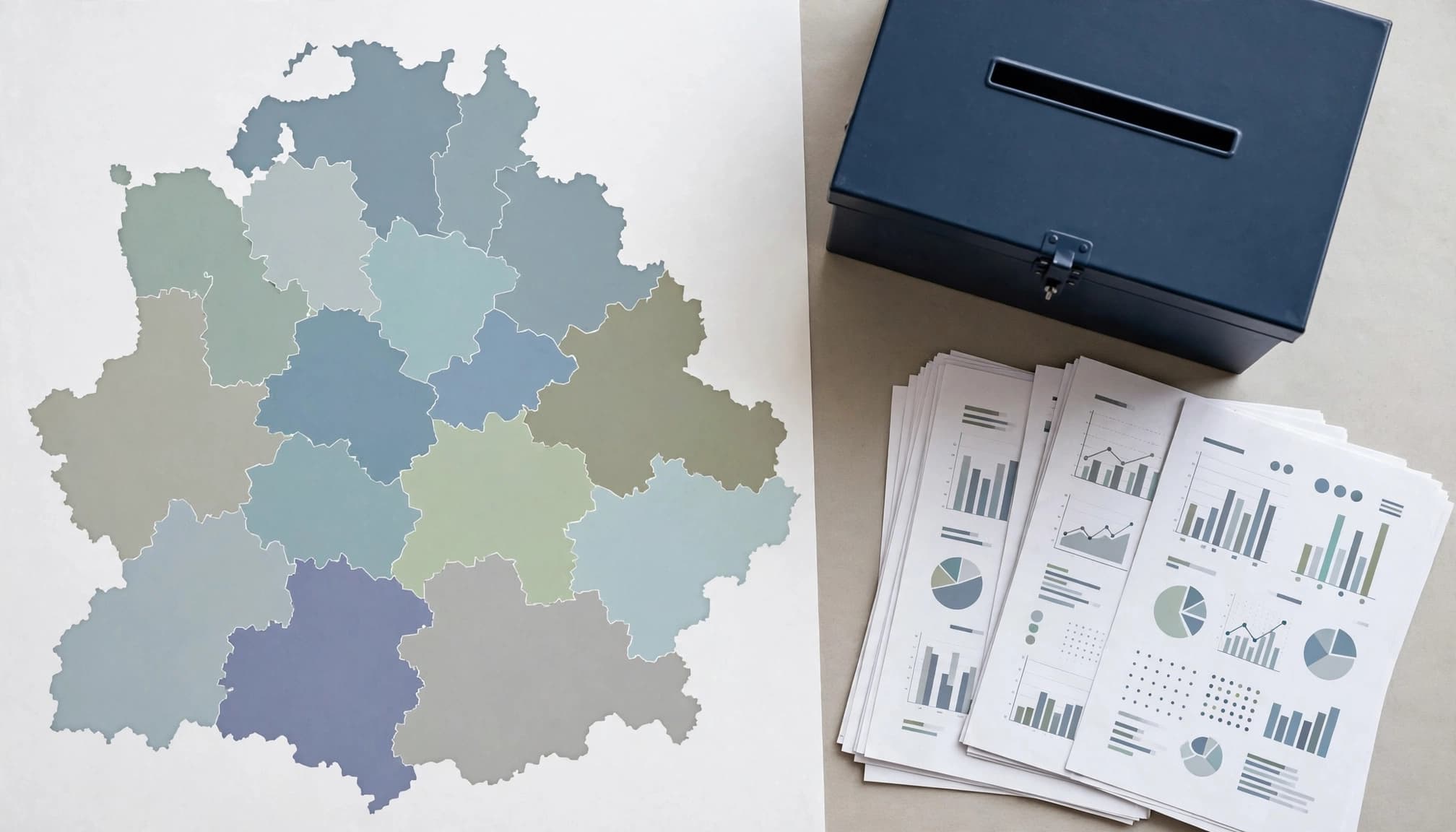
The regional reporting for the Landtagswahl in Sachsen-Anhalt covers 41 Wahlkreise, 14 districts and independent cities, and 218 municipalities. A statewide result can therefore conceal major regional differences. The official results are separated into state, district, constituency, municipality and polling-district levels.
For the 2026 election, the official results service of the State Returning Officer provides these levels separately. This makes it possible to see whether a party performs similarly across the state or whether its overall result combines very different regional outcomes.
How to read the state result, constituencies and direct mandates
Voters cast two different ballots in the state election. The Erststimmen elect a person in the relevant constituency. The candidate with the most votes there wins the direct mandate. A constituency is a geographically defined area in which one such seat is awarded directly.
The Zweitstimmen are cast for a party’s state list. They are decisive for the proportional allocation of seats in the Landtag. A party can therefore win many votes for individual candidates without leading in the statewide party result.
The two figures have different political meanings. A candidate may win a constituency through strong local ties, recognised political work or specific regional issues. Their party does not necessarily need to achieve the highest statewide party result. Conversely, a party can perform strongly across the state without winning every direct contest.
A direct mandate is the seat won immediately by a person in a constituency. The state list contains candidates who can enter parliament through the party result. The allocation process combines both routes under the rules of state law. Regional analysis should therefore keep the two ballot types separate.
The official results service does not combine these figures into one number. It shows which party leads in each constituency for both ballot types. In the published tables, the AfD led on both types in Salzwedel, Gardelegen-Klötze, Havelberg-Osterburg, Stendal, Genthin, Burg, Dessau-Roßlau, Dessau-Roßlau-Wittenberg, Sangerhausen and Halle IV.
This ranking must not be confused with one uniform result across the state. A constituency may lie well above or below a party’s statewide figure. The candidate’s result can also differ from the party’s result. A regional comparison should therefore include at least four figures:
- the share achieved by the leading candidate,
- the party’s result,
- the lead over the second-placed party,
- the Wahlbeteiligung in the same area.
The official constituency results are more informative for this purpose than a map showing only party colours. Colour coding identifies the winner. It does not show whether the lead amounts to a few tenths or several percentage points.
Which regional changes compared with 2021 stand out
The comparison with 2021 must use the same geographic unit and the same ballot type. Comparing the party result in the city of Halle with a candidate result from a constituency would be methodologically incorrect. It is also problematic to compare 2026 constituencies with an earlier division without checking the boundaries.
For 2026, the results service identifies the AfD as the leading party in both ballot types in the regions listed above. This shows a common regional ranking, but not the size of the lead or the change since 2021. To establish that, the relevant percentages from both election years must be compared directly.
A reliable comparison table should therefore contain at least these columns:
| Region | Party | 2021 | 2026 | Change |
|---|---|---|---|---|
| exact constituency | Party result | official figure | official figure | difference in percentage points |
| exact constituency | Candidate result | official figure | official figure | difference in percentage points |
The difference is calculated in percentage points. If a party’s result rises from 28.4 to 41.7 percent in one constituency, the change is 13.3 percentage points. This must not be confused with a relative increase of about 46.8 percent.
For regional comparisons, the district-level data in the official results service provides results for districts and independent cities. The platform also lists municipalities and polling districts. This allows users to check whether an unusual constituency result comes mainly from individual municipalities or is spread across the wider area.
Political interpretation requires particular caution. A high result in one constituency proves neither a specific voting motive nor a uniform public attitude. Regional differences may relate to participation, age structure, settlement patterns, economic conditions or the composition of the electorate. Official tables initially show only where parties performed strongly or weakly.
Additional data would be needed to explain why these differences changed between 2026 and 2021. This includes voter movement analyses, post-election surveys and social-structural data for the same geographic level. Only by combining these sources can analysts assess whether a regional change reflects participation, movement between parties or a different electorate.
The statewide average remains an important starting point, but it does not provide the complete picture. Results from Salzwedel, Stendal, Dessau-Roßlau and Halle IV show which party leads locally. Tables at constituency and municipal level show the size of the lead and whether it genuinely changed compared with 2021.
Quellenlage, Berechnung und Einordnung der amtlichen Zahlen
For the Landtagswahl in Sachsen-Anhalt, the figures must be assessed according to their publication status. The result portal of the state returning officer shows 100 percent counted, with 2,661 of 2,661 units recorded. The election took place on 6 September 2026, and the Wahlbeteiligung was 77.8 percent.
The state returning officer and the official portals at wahlen.sachsen-anhalt.de and wahlergebnisse.sachsen-anhalt.de are the primary sources. Media reports, projections, and surveys can support the analysis, but they don’t replace the official result determination.
Which figures are confirmed and which require checking
The published Zweitstimmen figures are 43.8 percent for the AfD, 17.2 percent for the CDU, 9.3 percent for the SPD, 8.9 percent for the Grüne, 8.6 percent for Die Linke, 5.3 percent for the BSW, and 2.6 percent for the FDP.
The Landtag comprises 83 seats. In the same order, the published seat figures are 39, 15, eight, eight, eight, five, and no regular mandate. The amtlichen Landesergebnisse provide the underlying figures.

The complete count, turnout, published state figures, and seat allocation are therefore documented. Before publication, however, every regional figure and seat count should be checked against the current official portal. This applies to counties, municipalities, polling units, and all rankings derived from them.
The reason lies in the process on election night. As individual polling units report their results, media outlets and result services initially publish interim figures. These are based on only part of the votes cast. As more reports arrive, the figure moves closer to the published result. An early percentage can therefore change, even when the political order initially remains the same.
Rounding also creates differences. One service may show a share to one decimal place, while another uses more decimal places. A figure of 17.24 percent can appear as 17.2 or 17.24 percent. Such differences aren’t automatically errors. The article should use the official precision and identify other media figures as rounded or earlier interim values.
The AfD and CDU figures should be checked particularly carefully in both the state overview and the regional tables. The FDP’s 2.6 percent must also be distinguished from a seat result, since it receives no regular mandate in the published overview.
Seat figures can change as well. Mandates aren’t rounded independently; they are allocated together under the applicable procedure. A small change in valid votes or a remainder can therefore affect the final mandate. A seat graphic from election night is suitable for citation only after it matches the official overview.
For the comparison with 2021, one calculation rule applies: the new share minus the 2021 share gives the change in percentage points. If a figure rises from 20.8 to 43.8 percent, the increase is 23.0 percentage points. That isn’t the same as percentage growth. A relative growth rate measures the increase against the starting value and describes a different measure.
The 2021 figures must come from the official final result. Projections, surveys, and later media summaries are unsuitable for this comparison. A change can only be calculated properly when both election years use the same vote type, geographical unit, and comparable definition.
The published result status must also be distinguished from the legally final result. The preliminary result is available after counting has ended, but remains formally provisional. The responsible election committees then review the records and establish the result conclusively. Corrections remain possible, even when the political order does not change.
The official figure is therefore more than a number with several decimal places. It results from a defined chain of verification. Only when the source, status, rounding, and calculation all match can the final composition of the Landtag and changes since 2021 be assessed reliably.
Frequently Asked Questions
When did the 2026 state election in Saxony-Anhalt take place?
The Landtagswahl took place on 6 September 2026. The figures presented in the article are based on the preliminary official final result.
How many seats did each party win?
The AfD received 39 of the 83 seats, followed by the CDU with 15. The SPD, Greens and Die Linke each won eight seats, the BSW five, and the FDP none.
What changed most compared with 2021?
The AfD increased its vote share by 23.0 percentage points and gained 16 seats. The CDU lost 19.9 percentage points and 25 seats, while the Landtag became smaller, declining from 97 to 83 seats.
Why did the FDP receive no seats despite winning votes?
The FDP received 2.6% of the second votes, below the five-percent threshold. As a result, it did not participate in the regular allocation of list seats.
Does the AfD have an absolute majority?
No. The absolute majority in an 83-seat Landtag requires 42 seats, while the AfD holds 39. It therefore needs support from other members for decisions requiring a majority.
Die neue politische Kräfteverteilung in Sachsen-Anhalt
Die Landtagswahl 2026 hat die politische Ordnung in Sachsen-Anhalt deutlich verändert. Die AfD wurde mit 43,8 Prozent der Zweitstimmen stärkste Kraft und erhält 39 der insgesamt 83 Sitze. Für die absolute Mehrheit wären 42 Mandate nötig. Obwohl die AfD diesem Wert nahekommt, besitzt sie keine eigene Mehrheit.
Die CDU verlor gegenüber 2021 besonders stark. Ihr Anteil an den abgegebenen Stimmen sank von 37,1 auf 17,2 Prozent, die Zahl ihrer Sitze fiel von 40 auf 15. Der Rückgang der CDU prägt damit die neue Sitzverteilung. Die Grünen zogen mit acht Mandaten stärker als 2021 in den Landtag ein, während das BSW mit 5,3 Prozent erstmals fünf Sitze erhielt. Die FDP ist nicht vertreten. SPD und Die Linke bleiben mit jeweils acht Sitzen parlamentarisch vertreten. Im Wahlkampf standen zudem Sven Schulze als CDU-Landesvorsitzender und Ulrich Siegmund als AfD-Fraktionsvorsitzender im politischen Fokus.
Auch die Wahlbeteiligung veränderte das Bild der Wahl. Sie stieg von 60,3 Prozent im Jahr 2021 auf 77,8 Prozent im Jahr 2026, ein Zuwachs von 17,5 Prozentpunkten. Der höhere Wert erklärt jedoch allein weder die Verschiebungen zwischen den Parteien noch die Motive der Wählerinnen und Wähler.
Das Ergebnis schafft mehrere rechnerische Mehrheiten. Die AfD bleibt trotz ihrer 39 Sitze auf Unterstützung angewiesen, während die übrigen Parteien zusammen 44 Mandate halten. Ein Stimmenanteil allein bestimmt deshalb weder die Regierungsbildung noch den nächsten Ministerpräsidenten. Eine Koalition setzt politische Vereinbarungen voraus. Auch eine Bewertung durch den Verfassungsschutz ergibt sich nicht automatisch aus dem Wahlergebnis. Entscheidend bleiben die Sitzverteilung und das Abstimmungsverhalten im 83-köpfigen Landtag.